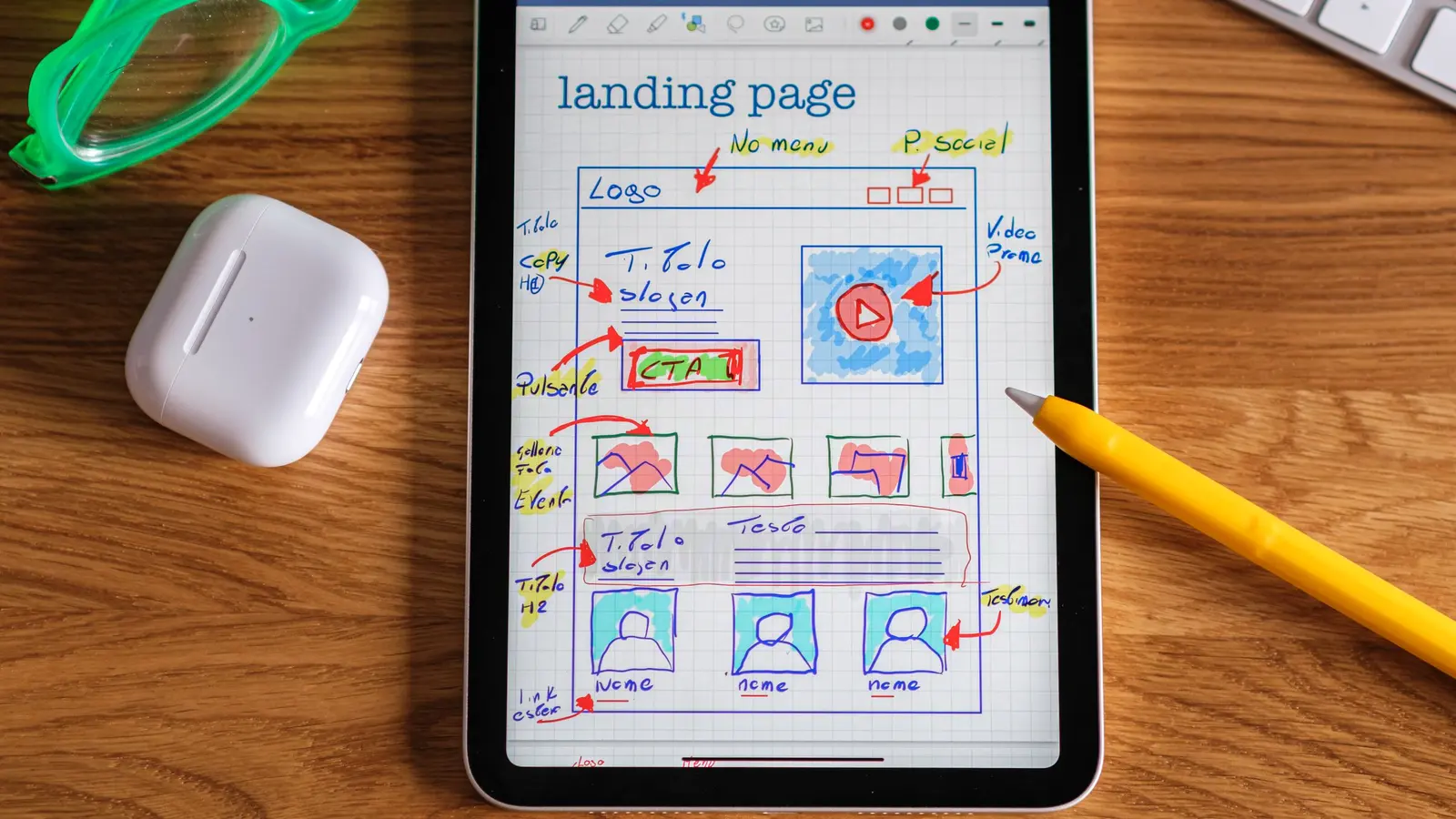
Pretty is not the job
A website has one job: make it obvious what you do, who it is for, and what to do next. Everything else (the animations, the hero video, the clever scroll effect) is decoration on top of that job, and decoration cannot save a site that fails it.
This is the single most expensive misunderstanding in the category. Businesses commission a site they are proud to show their friends, and then wonder why enquiries did not move. The site was never judged on enquiries. It was judged on whether the founder liked the homepage.
You have very little time to make the case. Nielsen Norman Group's research found most visitors leave a page within 10 to 20 seconds. Whatever your site is going to say for itself, it says it in that window.

What actually decides whether a site converts
- Clarity of offer. Can a stranger tell what you sell in five seconds? Most sites fail here and fix everything else instead.
- Speed. Core Web Vitals are a genuine ranking and conversion factor. A slow site loses people before the design has a chance to work.
- One obvious next step per page. Five equally weighted buttons is the same as none.
- Proof. Not a testimonial carousel nobody reads. Specific, credible evidence that you have done this before.
- Friction in the form. Every extra field costs you enquiries. Ask for what you need to have the conversation, not what you would like to know.
None of that is a design trend. All of it is testable, and most of it is cheap compared to a rebuild.
When the website is the thing holding you back
A shape we see regularly: traffic is fine. Rankings are fine. The ad account is competently run. Enquiries are flat, and nobody can work out why.
The site looked good. It also buried the offer below three screens of brand language, loaded slowly on mobile, and made people hunt for the next step. Fixing the website did more for growth than any new campaign would have, and it cost less than the quarter of ad spend that had been thrown at the problem first.
This is why we would rather look at your site before selling you traffic. If the website cannot explain the service in plain English, more clicks will not save it.
When NOT to rebuild your website
Rebuilds are the default recommendation of everyone who sells rebuilds. Here is when it is the wrong call.
- You have not tested the current one. If nobody has run a single change against the existing site, you are about to spend $30k on a guess. Conversion work on the current site is faster, cheaper, and tells you what the new site should do.
- The problem is the offer, not the site. No design fixes a proposition nobody wants.
- Your traffic is tiny. Fix the traffic problem first; a beautiful site nobody visits is a very expensive business card.
- You are rebuilding because it looks dated. That is a real reason to be embarrassed and a poor reason to spend money. Dated and converting beats modern and mute.
When a rebuild is genuinely right (the platform is holding you back, the structure fights every change, the site cannot be made fast) then do it properly, with conversion as the brief. That is how our web design work runs, and why lead-generation sites and online stores get different treatments.
Run the five-second test on your own site
Here is a free diagnostic you can run this afternoon, and it is more useful than most paid audits.
Show your homepage to someone who does not know what you do. Five seconds. Then take it away and ask them three questions: what does this business sell, who is it for, and what would you do next?
Most business owners are genuinely shaken by the answers. The site they thought was clear turns out to be clear only to people who already know the answer, which is to say, to them and their team.
- If they cannot say what you sell, no amount of traffic will help. Fix the headline before anything else.
- If they cannot say who it is for, you are competing on price by default, because nothing else distinguishes you.
- If they cannot say what to do next, you have a conversion problem that a redesign will not necessarily solve, but a clearer next step will.
This matters because you have almost no time. Nielsen Norman Group's research found most visitors leave within 10 to 20 seconds, and the pages that hold people are the ones that communicate value almost immediately. The elegant scroll animation is being admired by nobody, because they left during it.
And while you are there: check the site against Core Web Vitals on a phone, on mobile data. Not on the office wifi on a desktop. That is not the experience your customers are having, and the gap between the two is where a surprising number of enquiries quietly disappear.
Frequently asked questions
What makes a website convert?
Clarity of offer above everything: a stranger should know what you sell within five seconds. Then speed, one obvious next step per page, specific proof rather than generic testimonials, and forms that ask only for what you need to start a conversation.
How fast should my website be?
Fast enough to clear Google's Core Web Vitals thresholds, which are a fair bar and double as a ranking factor. Speed is not a technical nicety, most visitors leave within 10 to 20 seconds, and a slow page spends that window loading instead of persuading.
Should I rebuild my website or fix it?
Fix it first, in most cases. If nobody has tested changes on the current site, a rebuild is an expensive guess. Conversion work on what you already have is cheaper, faster, and tells you what the new site should actually do, which makes the eventual rebuild far better.
Is a good-looking website enough?
No. A beautiful site that does not explain the offer is an expensive brochure. Design should serve clarity, speed and the next step. If a site is judged on whether the owner likes the homepage rather than whether enquiries went up, it will keep failing at the only job that matters.